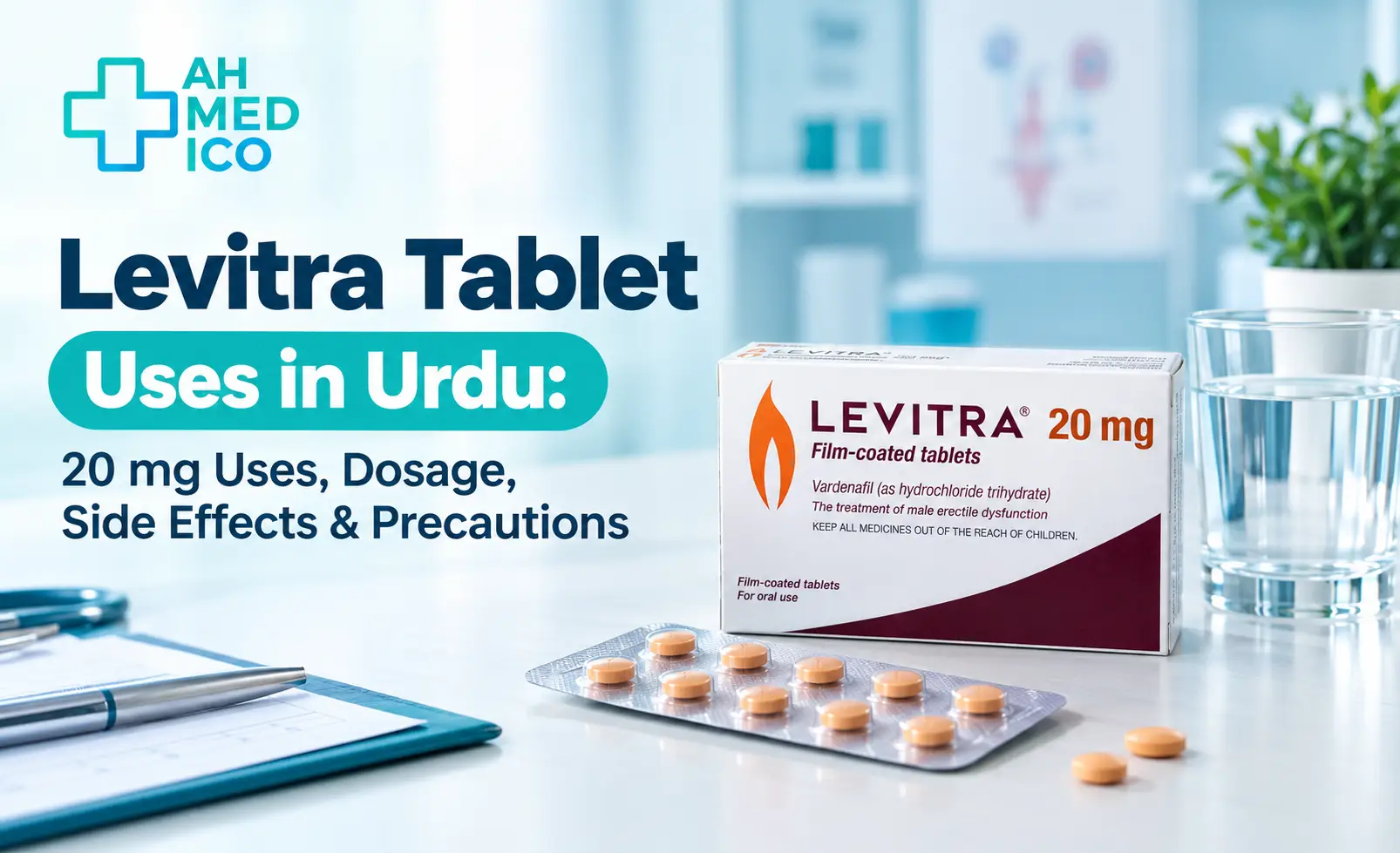
Levitra is a prescription medicine used to treat erectile dysfunction (ED) in adult men. The active ingredient is vardenafil, a phosphodiesterase type-5 (PDE5) inhibitor that helps increase blood flow to the penis during sexual stimulation. If you are searching for Levitra tablet uses, Levitra 20 mg uses in Urdu, dosage, side effects, or precautions, this guide explains the clinically important information in simple English. Ahmed Medicos aims to present medicine information in a clear format, but Levitra should be used only after a healthcare professional confirms that vardenafil is appropriate for you.
What Is Levitra Tablet?
Levitra is a vardenafil tablet prescribed for erectile dysfunction. Erectile dysfunction means difficulty getting or keeping an erection that is firm enough for sexual activity. Vardenafil does not permanently cure ED, increase sexual desire, or produce an erection without sexual stimulation.
Vardenafil belongs to the PDE5 inhibitor class. During sexual stimulation, nitric oxide signaling increases cyclic guanosine monophosphate (cGMP) in penile tissue. PDE5 normally breaks down cGMP. Vardenafil inhibits PDE5, allowing cGMP activity to persist longer and supporting relaxation of smooth muscle and increased penile blood flow. This mechanism can help an erection develop and remain firm when sexual stimulation occurs. The American Urological Association lists vardenafil among FDA-approved oral PDE5 inhibitors for ED.
Levitra Tablet Uses in Urdu: اہم استعمال
Levitra 20 mg is primarily used to treat erectile dysfunction in adult men. The main Levitra uses can be summarized as follows:
- ایریکٹائل ڈسفنکشن میں مدد کے لیے
- عضو تناسل میں خون کی روانی بہتر کرنا
- جنسی تحریک کے دوران erection برقرار رکھنا
- مردوں میں erectile dysfunction کا علاج
Levitra is not a treatment for low sexual desire, infertility, premature ejaculation, or sexually transmitted infections. Levitra does not protect against pregnancy, HIV, or other sexually transmitted infections. Vardenafil is intended for males and is not approved as a treatment for women.
Levitra 20 mg Uses and Benefits
Levitra 20 mg can improve erection firmness and the ability to maintain an erection when erectile dysfunction is present. The 20 mg strength is not automatically the right starting dose for every person. Doctors select the dose according to response, tolerability, age, health conditions, and interacting medicines.
A key benefit of vardenafil is its targeted action on erectile function. The medicine does not create sexual desire and does not cause a continuous erection. Sexual arousal remains necessary for the treatment to produce an erection. Oral PDE5 inhibitors generally begin working within a short period after dosing, but individual response varies.
How Does Levitra Work?
Levitra works by inhibiting PDE5 and supporting the cGMP pathway that increases penile blood flow during sexual stimulation. Sexual stimulation triggers nitric oxide release and cGMP formation in penile tissue. PDE5 breaks down cGMP, which limits smooth-muscle relaxation. Vardenafil inhibits PDE5, so cGMP remains active longer, helping the blood vessels in erectile tissue relax.
This process explains why taking a Levitra tablet alone does not automatically produce an erection. Adequate sexual stimulation remains necessary. Vardenafil treats the blood-flow component of ED, while the underlying cause of ED may require separate evaluation and treatment.
Levitra Dosage: How Much Should You Take?
The usual prescribed starting dose of regular vardenafil tablets is 10 mg, taken as needed about 60 minutes before sexual activity. A doctor may reduce the dose to 5 mg or increase the dose to 20 mg according to effectiveness and side effects. The maximum recommended frequency is once in 24 hours.
Levitra 20 mg is therefore generally a higher dose rather than a universal starting dose. Adults aged 65 years or older may be started at 5 mg because age can affect exposure and tolerability. Men taking stable alpha-blocker therapy may also require a lower starting dose. Never increase from 10 mg to 20 mg without medical advice.
Levitra 20 mg Dose: Important Instructions
Take the prescribed tablet with water, with or without food. Follow the exact strength and formulation supplied by your prescriber because different vardenafil formulations are not necessarily interchangeable. Do not take more than one dose within 24 hours.
Avoid self-adjusting the dose when the medicine seems less effective. Reduced response can result from incorrect timing, inadequate sexual stimulation, interacting medicines, or an underlying health problem. A clinician can determine whether a dose adjustment or another treatment is appropriate.
When Should You Take Levitra?
Take Levitra when needed, usually about 60 minutes before sexual activity, according to your prescription. Some sources describe a shorter practical window, but the prescribing information recommends approximately 60 minutes before sexual activity.
Levitra can be taken with or without food. A high-fat meal can affect the rate at which vardenafil reaches peak blood concentration, so follow your clinician’s instructions about meal timing if you notice delayed effects. Sexual stimulation is required for the medicine to work.
Levitra Side Effects
Common Levitra side effects include headache, flushing, nasal congestion, indigestion or upset stomach, and dizziness. Many side effects are mild, but symptoms that are severe, persistent, or unusual require medical advice.
Vardenafil can cause blood-pressure-related dizziness, particularly when combined with medicines that lower blood pressure. Grapefruit or grapefruit juice may interact with vardenafil, so ask a doctor or pharmacist whether you should avoid grapefruit products.
Serious Levitra Side Effects
Seek urgent medical care for an erection lasting longer than 4 hours, sudden vision loss, sudden hearing loss, fainting, severe allergic symptoms, or serious chest symptoms. A prolonged erection, called priapism, can cause permanent penile damage when treatment is delayed.
Sudden severe vision loss and sudden hearing loss have been reported with PDE5 inhibitors, although a direct causal relationship has not been established in every case. Stop further doses and seek immediate medical evaluation when sudden vision or hearing changes occur.
Who Should Not Take Levitra?
Do not take Levitra with nitrate medicines or riociguat because the combination can cause a dangerous fall in blood pressure. Examples of nitrates include nitroglycerin, isosorbide dinitrate, and isosorbide mononitrate. Recreational nitrate products such as amyl nitrite or butyl nitrite, often called poppers, are also unsafe with vardenafil.
Tell your doctor before using Levitra if you have heart disease, angina, an irregular heartbeat, a previous heart attack or stroke, high or low blood pressure, liver or kidney disease, seizures, bleeding disorders, stomach ulcers, Peyronie’s disease, sickle cell disease, or certain eye disorders. Sexual activity itself can place additional strain on the heart, so cardiovascular assessment may be necessary.
Levitra Interactions
Levitra interactions can change blood pressure, vardenafil exposure, or the risk of side effects. Give your doctor or pharmacist a complete list of prescription medicines, over-the-counter medicines, vitamins, and supplements before starting treatment.
Important interaction groups include nitrates, riociguat, alpha-blockers, some blood-pressure medicines, certain antibiotics such as clarithromycin and erythromycin, antifungal medicines such as ketoconazole and itraconazole, some HIV medicines, and certain heart-rhythm medicines. Do not combine Levitra with other PDE5 inhibitors such as sildenafil, tadalafil, or avanafil unless a clinician specifically directs the treatment.
Levitra and Alcohol
Vardenafil 20 mg did not potentiate alcohol’s blood-pressure-lowering effect in healthy volunteers in a controlled study. Heavy alcohol consumption can still make erections harder to obtain or maintain. Discuss alcohol intake with a healthcare professional if you have cardiovascular disease or regularly use blood-pressure medicines.
Do not assume that alcohol makes Levitra safer or more effective. Alcohol does not replace sexual stimulation and does not improve vardenafil’s therapeutic action.
Levitra Overdose: What Happens?
Taking more Levitra than prescribed can increase the risk of adverse effects and requires prompt medical advice. Possible overdose symptoms can include back or muscle pain and blurred vision, while excessive exposure may increase other medicine-related effects.
Do not take an extra tablet because the first dose seems ineffective. If you accidentally take more than prescribed, contact a healthcare professional or local emergency service for individualized guidance. Do not wait for severe symptoms before seeking advice.
Levitra Instructions for Safe Use
Use Levitra exactly as prescribed and never exceed one dose in a 24-hour period. Keep the medicine in its original container, protected from excess heat and moisture, and keep Levitra away from children.
Before treatment, tell your healthcare professional about heart problems, blood-pressure problems, kidney or liver disease, previous prolonged erections, vision or hearing disorders, and every medicine or supplement you use. Tell emergency healthcare providers when you last took vardenafil if you develop a heart-related emergency.
Levitra 20 mg vs Viagra
Levitra and Viagra are both PDE5 inhibitors used to treat erectile dysfunction, but the active ingredients are different. Levitra contains vardenafil, while Viagra contains sildenafil. Both medicines require sexual stimulation and can cause similar side effects such as headache, flushing, nasal congestion, indigestion, and dizziness.
Neither medicine is universally stronger for every patient. The appropriate option depends on medical history, other medicines, response, tolerability, timing preferences, and clinician assessment. Do not combine vardenafil with sildenafil or another ED medicine without medical direction.
When Should You See a Doctor for ED?
See a healthcare professional when erection problems occur repeatedly, suddenly, or alongside other health symptoms. ED can occur with diabetes, cardiovascular disease, high blood pressure, medication effects, hormonal problems, psychological factors, or other medical conditions.
A proper evaluation can identify contributing factors and determine whether vardenafil is suitable. Lifestyle measures such as regular physical activity, healthy eating, weight management, adequate sleep, and smoking cessation can support overall sexual and cardiovascular health, but lifestyle changes do not replace medical evaluation when persistent ED requires treatment.
Frequently Asked Questions
Is Levitra stronger than Viagra?
No, Levitra is not universally stronger than Viagra. Levitra contains vardenafil and Viagra contains sildenafil, and both are PDE5 inhibitors for erectile dysfunction. Individual response differs, so a clinician should select treatment according to medical history, interacting medicines, effectiveness, tolerability, and prescribed dosing.
Can I take Levitra every day?
No, you should not take Levitra more than once within 24 hours. Regular vardenafil tablets are generally used as needed for sexual activity. Your doctor may prescribe a lower dose or different schedule for specific circumstances, but never change frequency without professional medical advice.
What happens when you take Levitra?
Levitra increases penile blood flow during sexual stimulation by inhibiting PDE5. Vardenafil does not automatically create an erection or increase sexual desire. After the prescribed dose, sexual arousal is still necessary for an erection, while headache, flushing, nasal congestion, dizziness, or stomach upset can occur.
What are the benefits of taking Levitra?
The main benefit of Levitra is improved ability to achieve and maintain an erection when erectile dysfunction is present. Vardenafil supports penile blood flow during sexual stimulation, but vardenafil does not cure ED, increase libido, treat infertility, prevent pregnancy, or protect against sexually transmitted infections.
For personalized guidance, discuss your symptoms, medical history, medicines, allergies, and treatment goals with a qualified doctor or pharmacist before using vardenafil. Never share prescribed Levitra with another person, even when symptoms appear similar.
A pharmacist can verify the prescribed strength and identify interactions before dispensing vardenafil.
Key Takeaways
Levitra contains vardenafil and is prescribed for erectile dysfunction in adult men. The usual starting dose of regular tablets is 10 mg, while 20 mg may be prescribed when appropriate based on response and tolerability. Take Levitra as directed, usually about 60 minutes before sexual activity, and never exceed one dose in 24 hours.
The most important safety rule is to avoid Levitra with nitrate medicines or riociguat because the combination can cause a dangerous blood-pressure drop. Seek urgent medical care for an erection lasting more than 4 hours, sudden vision or hearing loss, fainting, severe allergic symptoms, or serious chest symptoms.
Levitra is a prescription medicine, so a doctor or qualified pharmacist should review your health conditions and current medicines before treatment. This article is for educational purposes and does not replace individualized medical advice.