Erectile dysfunction affects millions of men worldwide, impacting not just physical intimacy but also confidence and relationships. If you’re struggling with this condition, you’ve likely come across the Penegra tablet during your research. This prescription medication has helped countless men regain their sexual function and confidence. Let’s explore what Penegra is, how it works in your body, its benefits, potential side effects, and everything you need to know before considering this treatment.
What is Penegra Tablet?
Penegra is a prescription medication, specifically designed to treat erectile dysfunction in adult men. The active ingredient in Penegra is sildenafil citrate, which belongs to a class of drugs called phosphodiesterase type-5 (PDE5) inhibitors.
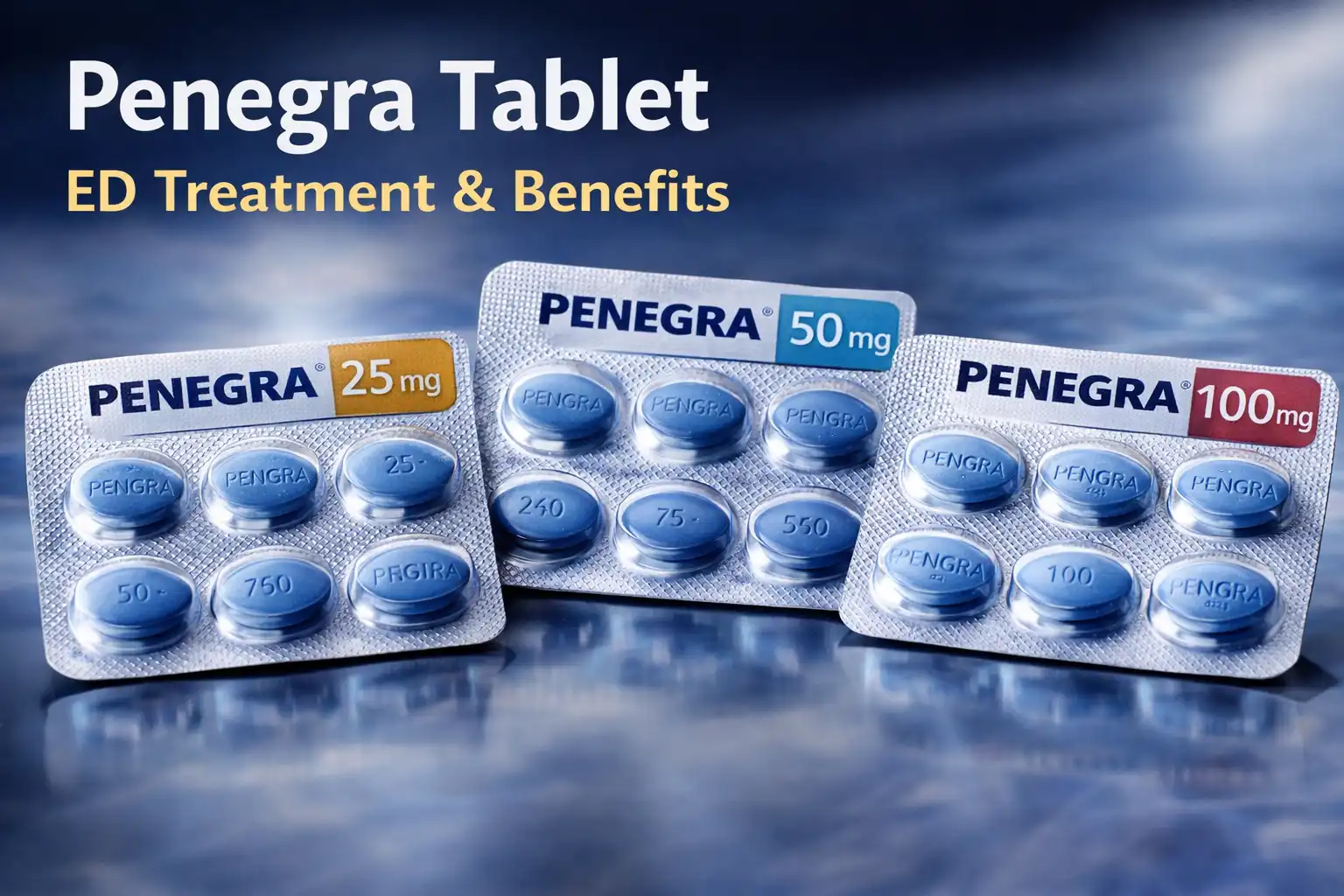
This medication comes in different strengths: 25mg, 50mg, and 100mg, allowing your doctor to prescribe the most appropriate dose for your specific needs.
Important note: Penegra is strictly for men and should never be used by women, children under 18, or as a recreational drug. You need a doctor’s prescription to obtain this medication legally and safely.
How Penegra Tablet Works
Understanding how Penegra works helps you set realistic expectations about what this medication can and cannot do for you.
Erectile dysfunction happens when you cannot achieve or maintain an erection firm enough for sexual intercourse. This occurs due to decreased blood flow to the penis, which can result from physical injuries, certain medical conditions, or psychological factors like anxiety, stress, or depression.
When you become sexually aroused, your body naturally releases nitric oxide in the penile tissue. This triggers the production of cyclic guanosine monophosphate (cGMP), a chemical that relaxes the smooth muscles in your penis and widens the blood vessels. This process allows more blood to flow into the penis, creating an erection.
However, an enzyme called phosphodiesterase type-5 (PDE5) breaks down cGMP, which can prevent or weaken erections. Penegra works by inhibiting this PDE5 enzyme, allowing cGMP levels to remain elevated for longer periods. The result is improved blood flow to your penis during sexual stimulation, helping you achieve and maintain a firm erection.
The medication typically starts working within 30 to 60 minutes after you take it, and its effects can last for 4 to 6 hours. This gives you a window of opportunity for sexual activity without feeling rushed.
Critical point: Penegra only works when you’re sexually stimulated. It does not automatically create an erection, nor does it increase sexual desire. You still need natural arousal for the medication to be effective.
Key Penegra Tablet Benefits
The primary benefit of Penegra is its effectiveness in treating erectile dysfunction. Clinical studies have shown impressive results, with men experiencing significant improvement in their ability to achieve and maintain erections during sexual activity.
Beyond the physical aspect, Penegra restores your confidence in intimate situations. Many men report reduced performance anxiety and improved overall satisfaction in their relationships. This psychological boost often matters as much as the physical improvement.
The medication offers flexibility, too. With effects lasting up to 4-6 hours, you don’t need to time your dose precisely before intimacy. You can take it and feel confident that you’ll be ready when the moment is right.
Research shows that Penegra 100mg and other doses maintain their effectiveness over the long term. It also indicates discontinuation rates due to insufficient response remain under 3% annually, which speaks to the medication’s reliability.
An important reassurance: Penegra does not affect your fertility or sperm quality. You can use it without worrying about future family planning.
While less common, doctors also prescribe sildenafil citrate for pulmonary arterial hypertension, a condition that causes high blood pressure in the arteries leading to your lungs.
Dosage and How to Take Penegra Tablet
Your doctor will determine the right dose based on your health condition, age, and how you respond to treatment. Never adjust the dosage on your own.
Take one tablet approximately 30 to 60 minutes before you plan to have sex. The medication can work if taken anywhere from 30 minutes to 4 hours before sexual activity, but taking it about an hour ahead gives optimal results.
You can take Penegra with or without food. However, avoid heavy or high-fat meals around the time you take the tablet, as these can delay its effectiveness.
Swallow the tablet whole with a glass of water. Do not chew, crush, or break it, as this can affect how the medication absorbs into your system.
Never exceed one dose in 24 hours. Taking more than prescribed will not improve your performance or make the effects stronger. Instead, it significantly increases your risk of experiencing serious side effects.
What If You Miss a Dose?
Since Penegra is taken as needed before sexual activity, missing a dose is unlikely. If you realize you forgot to take it and still plan to have sex, take it as soon as you remember. However, if it’s almost time for your next planned dose, skip the missed one. Never take a double dose to compensate for the missed tablet.
Overdose Warning
If you take more Penegra than prescribed, you may experience severe symptoms, including intense headache, extreme dizziness, severe indigestion, flushing, and stuffy nose. Contact your doctor immediately or visit the nearest hospital if you suspect an overdose.
If you have liver disease, kidney problems, or are elderly, your doctor may start you on a lower dose and adjust as needed.
Penegra Tablet Side Effects
Like all medications, Penegra can cause side effects. Most are mild and resolve on their own as your body adjusts to the medication.
Common Side Effects
These side effects affect many users but are generally temporary:
- Headache: The most frequently reported side effect
- Flushing: You may feel warmth and notice redness in your face, ears, and neck
- Dizziness: Avoid sudden movements when standing up
- Indigestion and upset stomach: Usually mild and passes quickly
- Nasal congestion: A stuffy nose is common but temporary
- Blurred vision or visual disturbances: Your vision may seem slightly different
- Sensitivity to light: Bright lights may bother you temporarily
- Muscle pain: Some men experience mild muscle aches
- Nausea: This typically subsides within a few hours
- Nosebleed: Occasional and usually minor
- Diarrhea: Generally temporary
- Rash: Skin reactions are possible but uncommon
- Burning, numbness, or tingling in the arms and feet: Contact your doctor if this persists
- Excessive tearing of the eye: Usually resolves on its own
If these side effects persist for a long time or worsen, consult your doctor. They may adjust your dosage or suggest ways to manage the symptoms.
Serious Side Effects
While rare, some side effects require immediate medical attention:
Priapism is the most serious risk, a prolonged and painful erection lasting more than 4 hours. This condition can permanently damage your penis if not treated immediately. Seek emergency care if this happens.
Sudden vision loss or severe visual disturbances need urgent medical evaluation. Stop taking Penegra and contact your doctor right away if you experience sudden problems with your eyesight.
Sudden hearing loss or deafness, often accompanied by ringing in the ears (tinnitus) or dizziness, requires immediate attention.
Chest pain or irregular heartbeat can signal a serious cardiovascular reaction, especially if you have pre-existing heart conditions.
Severe allergic reactions manifest as rash, swelling of the face or throat, or difficulty breathing. Get emergency help immediately if you notice these symptoms.
Other serious symptoms include bloody or cloudy urine, painful urination, and severe drops in blood pressure (hypotension), causing fainting or extreme dizziness.
Precautions and Warnings
When You Should NOT Take Penegra
Certain conditions make Penegra dangerous or inappropriate:
Never take Penegra if you’re using nitrate medications for chest pain or angina (such as nitroglycerin or isosorbide mononitrate). This combination causes a dangerous drop in blood pressure that can be life-threatening. You should maintain at least a 24-hour gap between taking nitrates and Penegra.
Avoid Penegra if you’re taking riociguat for pulmonary arterial hypertension, as the interaction poses serious risks.
Recent cardiovascular events make Penegra unsafe. Do not use this medication if you’ve had a heart attack in the past 3 months, or a stroke or heart failure in the past 6 months.
Skip Penegra if you have severe heart disease, liver problems, kidney disease, or very low or uncontrolled blood pressure.
Men with specific eye conditions, particularly retinitis pigmentosa or a history of sudden vision loss, should not take this medication.
If you’re allergic to sildenafil citrate or any other ingredients in Penegra, avoid it completely.
Special Precautions
Before starting Penegra, inform your doctor about all your medical conditions, especially:
- Sickle cell anemia or other blood-related disorders
- Bleeding problems or stomach ulcers
- Penis deformities or anatomical abnormalities
- Blood cancer
Can you take Penegra if you have diabetes? Yes, Penegra is generally safe for diabetic patients when prescribed by your doctor. However, you must inform your doctor about your diabetes and any medications you’re taking for it.
Can younger men take Penegra? Yes, if your doctor prescribes it, you can take Penegra in your twenties or at any adult age when experiencing erectile dysfunction.
Avoid or limit alcohol consumption while taking Penegra. Alcohol increases the risk of side effects like dizziness and can reduce the medication’s effectiveness. Drinking can temporarily impair your ability to get an erection, defeating the purpose of the medication.
Do not drive or operate heavy machinery if you experience dizziness or blurred vision after taking the tablet. Your safety and the safety of others depend on your full alertness.
Important Note on Liver and Kidney Disease
If you have severe liver disease, Penegra should be used with extreme caution. Your doctor may need to adjust your dose significantly or recommend an alternative treatment. The same applies to kidney problems, dose adjustments are often necessary to prevent medication buildup in your system.
Drug and Food Interactions
Penegra can interact with several medications, potentially causing harmful effects or reducing effectiveness.
Medication Interactions
Antihypertensive medications (blood pressure drugs like amlodipine and metoprolol) can interact with Penegra, causing a significant drop in blood pressure.
Alpha-blockers used for prostate problems or high blood pressure (such as doxazosin and tamsulosin) combined with Penegra may lead to dangerously low blood pressure.
Inform your doctor if you take medications for psychiatric illnesses, diabetes, infections, asthma, HIV, or painkillers. Some antibiotics and antifungal medications can also interact with sildenafil citrate.
CYP3A4 inhibitors like ritonavir increase sildenafil levels in your blood, raising the risk of side effects.
Food Interactions
Grapefruit juice significantly increases sildenafil levels in your bloodstream, potentially causing excessive side effects. Avoid grapefruit and grapefruit juice while taking Penegra.
Heavy or high-fat meals delay the medication’s absorption, meaning it takes longer to work. For best results, take Penegra on an empty stomach or after a light meal.
Storage and Handling
Store Penegra tablets in a cool, dry place at room temperature. Keep them away from direct sunlight and moisture, which can degrade the medication.
Always store the tablets in their original packaging and keep them out of reach of children and pets.
Check the expiration date before taking any tablet. Never use expired medication, as it may be less effective or potentially harmful.
Frequently Asked Questions
What happens after taking Penegra?
After taking Penegra, you’ll notice effects within 30-60 minutes when sexually aroused. The medication relaxes blood vessels in your penis, improving blood flow. You may experience mild side effects like headache or flushing. Remember, you need sexual stimulation for the medication to work effectively.
How long does Penegra last?
Penegra’s effects typically last for 4 to 6 hours after taking the tablet. The medication remains in your body for up to 24 hours, though its peak effectiveness occurs within the first few hours. This duration gives you adequate time for sexual activity without feeling rushed or pressured.
Are Viagra and Penegra the same?
Both Viagra and Penegra contain the same active ingredient, sildenafil citrate, and work identically to treat erectile dysfunction. The main differences are the manufacturer (Pfizer makes Viagra, Zydus makes Penegra) and price. Penegra is generally more affordable while offering the same therapeutic benefits as Viagra.
Final Thoughts
Penegra tablet offers an effective, clinically proven solution for men dealing with erectile dysfunction. By understanding how it works, its benefits, potential side effects, and proper usage guidelines, you can make informed decisions about your treatment.
Remember that Penegra requires sexual stimulation to work and should only be taken once in 24 hours. While side effects are generally mild and temporary, stay alert for serious reactions that need immediate medical attention.
Never take Penegra without consulting a healthcare provider, especially if you have heart conditions, take nitrate medications, or have other health concerns. Your doctor will assess whether this medication is safe for you and prescribe the appropriate dosage.
With responsible use under medical supervision, Penegra can significantly improve your quality of life and restore confidence in intimate situations. Open communication with your healthcare provider ensures you get the maximum benefit while minimizing risks. Medical Disclaimer: This article provides information for educational purposes only and does not substitute professional medical advice, diagnosis, or treatment. Always consult your doctor or qualified healthcare provider before starting any new medication or if you have questions about your health condition.