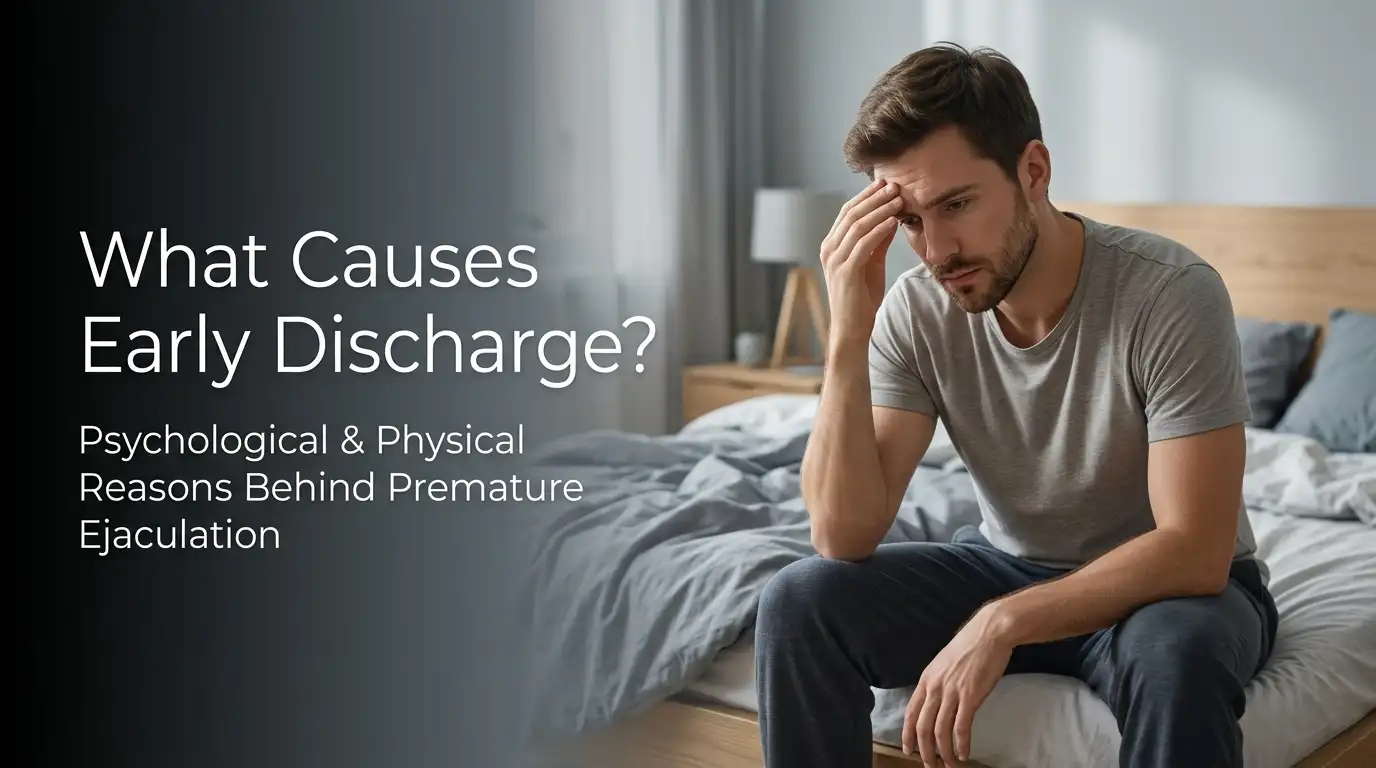
Early discharge, also called premature ejaculation (PE), is a common sexual problem in men. It happens when a man ejaculates too quickly during sex and cannot control the timing.
Many men experience this problem at some point in life. Sometimes it happens occasionally, but frequent early ejaculation can affect confidence, relationships, and sexual satisfaction.
The good news is that premature ejaculation is treatable. Many men improve their control with exercises, lifestyle changes, counseling, and medicines recommended by a doctor. This guide explains what PE is, its types, symptoms, causes, risk factors, how it’s diagnosed, and every treatment option available, from natural techniques to medication.
What Is Premature Ejaculation?
Early discharge means ejaculation happens sooner than a man wants during sex. A man with premature ejaculation may climax very quickly and feel unable to delay it. Medically, PE is generally defined as ejaculating within about one minute of penetration regularly, though doctors also weigh how much distress it causes, not just the timing itself.
Doctors usually consider it a problem when:
- It happens regularly, not just once in a while
- A man cannot control ejaculation despite wanting to delay it
- It causes stress, embarrassment, or affects the relationship
Early discharge can happen to men of any age. It does not mean a man is weak or unhealthy; it’s one of the most common male sexual complaints seen by doctors.
Symptoms of Premature Ejaculation
The core symptom is simple: ejaculating sooner than you or your partner would like, most or all of the time, with a felt inability to delay it. Related signs include:
- Ejaculating within about a minute of penetration regularly
- Feeling anxious or tense before or during sex because of timing concerns
- Avoiding intimacy due to embarrassment about ejaculating too fast
- Frustration or distress that affects your confidence or relationship
If it happens occasionally, that’s normal variation, not necessarily a condition that needs treatment. It becomes worth addressing when it’s consistent and bothersome.
Types of Premature Ejaculation
There are two main types of premature ejaculation:
Lifelong Premature Ejaculation
This type starts from a man’s first sexual experiences. Common signs include:
- Quick ejaculation from the very beginning
- Difficulty controlling ejaculation across most or all sexual encounters
- Anxiety during sexual activity
Acquired Premature Ejaculation
This type develops after a man previously had normal ejaculation control. Possible causes include:
- Stress
- Health problems
- Relationship issues
- Hormonal changes
- Erectile problems
Some men also experience what’s called variable PE, where fast ejaculation happens sometimes but not consistently. This is usually considered a normal variation rather than a disorder.
Causes of Early Discharge
Premature ejaculation can happen due to different physical and emotional factors.
Psychological Causes
Performance anxiety is one of the most common causes. Many men worry about satisfying their partner, lasting longer, or performing well. This pressure can increase excitement and make ejaculation happen faster. A common cycle is: anxiety → early ejaculation → stress → more anxiety. Reducing stress and building confidence can help improve control.
Stress and depression can also affect sexual performance. Work pressure, financial problems, and personal worries may make it harder to relax during intimacy. Depression can reduce confidence, sexual desire, and control over ejaculation.
Physical Causes
- Hormonal problems: changes in thyroid or reproductive hormones may affect ejaculation control.
- Brain chemistry: low levels of serotonin, a brain chemical involved in mood and impulse control, are linked to shorter time-to-ejaculation.
- Erectile dysfunction: some men rush during sex because they fear losing their erection, which increases the chances of early ejaculation. Treating the underlying ED often improves PE too.
- Prostate problems: inflammation of the prostate or urethra can affect sexual function and ejaculation timing.
- Increased sensitivity: some men naturally have higher penile sensitivity, which can lead to faster ejaculation.
Risk Factors for Premature Ejaculation
Certain factors make PE more likely, even though they don’t directly cause it:
- Anxiety, whether related to sex specifically or general life stress
- Erectile dysfunction or fear of developing it
- A history of sexual repression or early sexual experiences involving urgency
- Relationship problems or lack of communication with a partner
- Certain prostate or urinary conditions
- Stopping medications that were controlling ejaculation timing (such as certain antidepressants)
Complications of Untreated PE
Premature ejaculation itself isn’t physically harmful, but leaving it unaddressed can lead to:
- Ongoing relationship stress or conflict
- Reduced sexual satisfaction for both partners
- Anxiety or avoidance around intimacy
- Lower self-confidence
- Fertility-related stress in couples trying to conceive, since reduced sexual satisfaction can reduce frequency of intercourse
How Is Premature Ejaculation Diagnosed?
PE is diagnosed mainly through a conversation, not invasive testing. Your doctor will ask about your sexual history, including:
- Whether you’ve always ejaculated quickly or if this developed later
- How long it typically takes from penetration to ejaculation
- Whether you feel in control of the timing
- How much distress or relationship strain it’s causing
- Any medications you’re currently taking
If your history doesn’t point to an obvious psychological cause, your doctor may examine your prostate or check for signs of a physical or hormonal issue. Being open and specific with your doctor helps them recommend the right treatment faster; there’s no reason to feel embarrassed, since this is one of the most common concerns doctors hear.
How to Stop Early Discharge Naturally
Many men improve ejaculation control with simple techniques and lifestyle changes, without needing medication.
Start-Stop Technique
This technique helps train the body to delay ejaculation.
- Stop stimulation when you feel close to ejaculation
- Wait until the urge decreases
- Start again slowly
Regular practice may improve control over time.
Squeeze Technique
Similar to the start-stop method, but with an added step:
- When you feel close to ejaculating, you or your partner gently squeezes the tip of the penis for a few seconds
- This reduces arousal enough to delay ejaculation
- Release, wait, then continue
Pelvic Floor Exercises
Weak pelvic floor muscles are linked to reduced ejaculatory control. To strengthen them, contract the muscles you’d use to stop urinating mid-flow, hold for a few seconds, then release. Doing this daily, in sets, may improve control over several weeks.
Reduce Performance Pressure
Slowing down foreplay, focusing on your partner’s pleasure beyond intercourse, and communicating openly about pacing can reduce the anxiety that often drives PE.
Medical Treatments for Premature Ejaculation
If natural methods don’t provide enough improvement, doctors may suggest medical treatment.
Delay Sprays and Creams
Topical anesthetic sprays and creams reduce penile sensitivity and may help men last longer during sex. They’re applied a short time before intercourse and should be used according to product instructions.
Prescription Medicines
Dapoxetine is the most widely prescribed oral medication specifically for premature ejaculation, and it works by increasing serotonin activity to help delay ejaculation. It’s available in Pakistan as Depoxitine 60mg and Long Drive 60mg.
For men dealing with both PE and erectile difficulty together, combination tablets like TurboX Men, which combine dapoxetine with sildenafil, are often used since treating both issues together tends to work better than treating either alone.
Always use prescription medicines after consulting a healthcare professional, and never combine them with nitrate-based medications.
Counseling and Behavioral Therapy
Counseling can help men manage anxiety, stress, and relationship issues linked with premature ejaculation. Behavioral therapy, ideally involving both partners, has been shown to help a large majority of men who commit to it consistently, though PE can return and additional sessions may be needed.
Premature Ejaculation vs Erectile Dysfunction: Know the Difference
These two issues often get confused, but they’re different problems with different causes and solutions. Premature ejaculation is ejaculating sooner than you or your partner would like. Erectile dysfunction is the inability to get or keep an erection firm enough for sex.
Some men deal with both simultaneously, especially when anxiety is involved, and treating one often improves the other. If you’re not sure which one you’re dealing with, understanding the distinction is the first step toward the right solution.
When Should You See a Doctor?
Talk to a doctor if:
- PE happens consistently, not just occasionally
- It’s causing distress, embarrassment, or relationship problems
- It started suddenly, especially alongside erection difficulties
- Natural techniques haven’t improved things after a few weeks of consistent practice
- You suspect an underlying hormonal or prostate issue
One instance of early ejaculation doesn’t mean you have a condition that needs treatment. But if it’s a consistent pattern, addressing it early usually leads to faster, better results.
Frequently Asked Questions
What is considered premature ejaculation?
Doctors generally consider it PE when ejaculation happens within about a minute of penetration regularly and causes distress, not just a single occasional instance.
Can premature ejaculation be cured?
There’s no guaranteed permanent cure, but PE is very manageable. Most men see meaningful improvement through behavioral techniques, counseling, medication, or a combination of these.
Is premature ejaculation linked to erectile dysfunction?
Yes. Many men with PE also experience ED, and fear of losing an erection can itself trigger faster ejaculation. Treating one often helps the other.
Does premature ejaculation go away on its own?
Sometimes, especially if it’s linked to temporary stress, a new relationship, or early sexual inexperience. Persistent PE usually benefits from a structured approach rather than waiting it out.
What medicine helps with premature ejaculation?
Dapoxetine is the most commonly prescribed medication specifically for PE. It should only be used under medical guidance, as with any prescription treatment.
Can stress cause premature ejaculation?
Yes. Stress and anxiety are among the most common causes of PE, particularly performance anxiety, which can create a cycle that makes the problem worse over time.