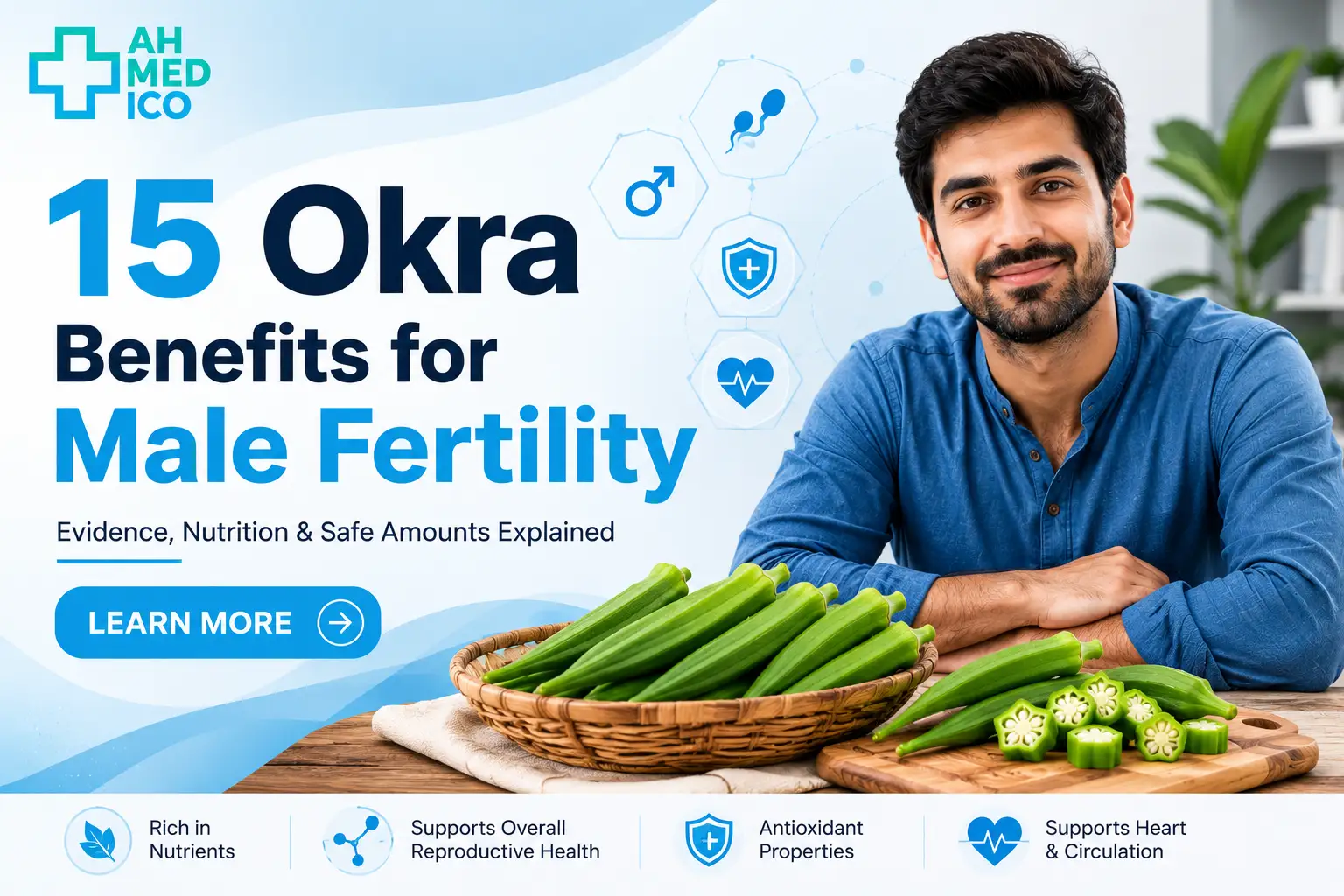
Okra, known as bhindi across Pakistan and India, is one of the most common vegetables on the dinner table, and one of the most talked-about when it comes to male reproductive health. Search any forum or WhatsApp health group and you’ll find two opposite claims: that okra boosts male fertility, and that it destroys it. Neither claim is quite right on its own.
Okra is a nutrient-dense vegetable rich in zinc, folate, vitamin C, and antioxidants that support general reproductive health markers, such as protecting sperm cells from oxidative stress. However, direct human clinical evidence that okra increases sperm count or testosterone is limited, and most supportive studies are in animals. Separately, several animal studies suggest that very high, concentrated intakes of okra seed or extract (not normal cooked servings) may be linked to reduced sperm quality, due to a compound called gossypol. In short: okra in normal dietary amounts is a healthy, supportive food, not a fertility treatment, and not something to fear in ordinary portions.
This guide walks through the full nutritional profile, all 15 evidence-based benefits, the safety concerns you should actually know about, and answers to the most common questions men in Pakistan search for. If you’re dealing with a specific fertility or male weakness concern rather than general nutrition questions, it’s worth reading through our detailed guide on mardana kamzori ka ilaj before making diet the centerpiece of your plan.
What Is Okra?
Okra (Abelmoschus esculentus), also called lady’s finger, is a green, ridged, pod-shaped vegetable that’s a dietary staple across South Asia, the Middle East, Africa, and the southern United States. It has a mild flavor and releases a mucilage (a natural soluble fiber) when cooked, which is why it thickens curries, soups, and stews.
Botanically, okra is technically a fruit (it develops from a flower and contains seeds), but it’s prepared and eaten as a vegetable, a distinction that comes up often in search queries.
Okra Meaning in Urdu, بھنڈی
اوکرا کو اردو میں بھنڈی کہا جاتا ہے۔ یہ ایک سبز رنگ کی لمبی اور نرم سبزی ہے جو گرمیوں کے موسم میں عام طور پر کھائی جاتی ہے۔ اس کا اصل تعلق افریقہ سے ہے، جہاں سے یہ آہستہ آہستہ ایشیا، یورپ اور امریکا کے مختلف حصوں میں پہنچی۔ آج بھنڈی پاکستان، بھارت، بنگلہ دیش، مصر، نائجیریا اور امریکہ سمیت دنیا کے کئی ممالک میں شوق سے کھائی جاتی ہے۔ یہ سبزی ذائقے دار ہونے کے ساتھ ساتھ فائبر، وٹامنز اور منرلز سے بھی بھرپور ہے۔
بھنڈی کے فائدے مردوں کے لیے (Bhindi Ke Fayde Mardon Ke Liye)
بھنڈی میں موجود زنک، فولیٹ، اور اینٹی آکسیڈنٹس مردانہ تولیدی صحت کے لیے مددگار سمجھے جاتے ہیں۔ یہ خون کی روانی، ہارمونل توازن، اور مجموعی توانائی میں مدد دے سکتی ہے۔ تاہم، یہ یاد رکھنا ضروری ہے کہ بھنڈی کوئی علاج نہیں بلکہ ایک صحت بخش غذا کا حصہ ہے۔ بانجھ پن یا مردانہ کمزوری کے سنگین مسائل کے لیے مردانہ کمزوری کے علاج سے متعلق مکمل رہنمائی حاصل کرنی چاہیے۔
Nutritional Profile of Okra (Per 100g, Raw)
For most healthy adults, 1 to 2 cups of cooked okra (roughly 100 to 200g) a few times per week is considered a safe, nutritious amount, according to standard USDA data.
| Nutrient | Amount (per 100g) |
| Calories | ~31 to 33 kcal |
| Water | ~90 g |
| Carbohydrates | ~7 g |
| Dietary Fiber | ~3.2 to 3.7 g |
| Protein | ~1.9 g |
| Total Fat | ~0.2 g |
| Vitamin C | ~23 mg |
| Vitamin K | ~31 µg |
| Folate (B9) | ~60 µg |
| Manganese | notable source |
| Magnesium | ~57 mg |
| Potassium | ~299 mg |
| Calcium | ~82 mg |
| Zinc | trace amount |
Source: USDA FoodData Central. Values vary slightly across databases depending on raw vs. cooked measurement and regional variety.
Several of these nutrients, zinc, folate, magnesium, vitamin C, and potassium, are directly relevant to sperm health, hormone regulation, and circulation, which is why okra keeps coming up in male fertility discussions. Pairing a balanced diet with a good quality multivitamin can also help cover any nutrient gaps that diet alone may miss.
15 Okra Benefits for Male Fertility
Each benefit below is separated into a distinct mechanism, so you can see exactly what nutrient is doing what, and how strong the underlying evidence actually is.
- Protects Sperm Cells from Oxidative Damage Okra’s vitamin C and polyphenol antioxidants help neutralize free radicals, which are a well-established contributor to sperm DNA damage and reduced sperm quality. Evidence level: established mechanism, general antioxidant research.
- Supports Zinc-Dependent Testosterone Production Zinc is a required cofactor in testosterone synthesis, and zinc deficiency is linked to lower testosterone in clinical nutrition research. Okra contains zinc, though only in trace amounts per serving. If low testosterone or stamina is a concern, options like Turbo X Men provide more concentrated support than food alone typically can. Evidence level: established for zinc generally; okra’s contribution is modest.
- Aids Folate-Dependent Sperm DNA Integrity Folate supports DNA synthesis and repair, relevant during spermatogenesis (sperm cell production). Low folate status has been associated with sperm DNA fragmentation in some studies. Evidence level: established for folate; direct okra-specific human trials are lacking.
- Supports Hormonal Balance via Magnesium and B6 Magnesium and vitamin B6 are involved in enzyme activity tied to hormone regulation and nervous system function. Evidence level: general nutritional science; not okra-specific.
- May Support Healthy Blood Sugar, Indirectly Aiding Hormonal Health Okra’s soluble fiber slows carbohydrate absorption. A 2023 systematic review found okra consumption may help regulate blood sugar in people with prediabetes or type 2 diabetes, relevant because poorly controlled blood sugar is independently linked to lower testosterone and impaired fertility. If blood sugar is an ongoing concern, our overview of medicines for type 2 diabetes in Pakistan and a diet chart for diabetic patients go into more detail. Evidence level: moderate, supported by human review for blood sugar; the fertility link is indirect.
- Anti-Inflammatory Support for Reproductive Tissue Okra’s phenolic compounds and flavonoids (including quercetin and catechins) have antimicrobial and anti-inflammatory properties in preclinical research. Chronic inflammation is a known contributor to reduced sperm quality. Evidence level: preclinical/general, not fertility-specific human trials.
- Supports Vascular Health and Circulation Potassium helps regulate blood pressure and fluid balance, and vitamin K supports vascular flexibility, both relevant to healthy blood flow throughout the body. Since blood pressure and heart health are closely linked to this, it’s worth knowing how to check your blood pressure at home and how to keep your heart healthy. Evidence level: established for cardiovascular health generally.
- May Support Erectile Function via Blood Flow Since healthy erectile function depends heavily on unobstructed blood flow, nutrients that support vascular health (potassium, antioxidants, vitamin K) are plausibly relevant. No direct clinical studies have tested okra specifically for erectile dysfunction, this remains an extrapolation from its cardiovascular nutrient profile. For a proper look at causes and treatment options, see our guide on how to get rid of erectile dysfunction. Evidence level: theoretical/indirect.
- Supports Libido and Sexual Energy Zinc, magnesium, and B6 are all involved in energy metabolism and nerve signaling relevant to sexual function. Evidence level: general nutritional support, not a proven aphrodisiac effect.
- Supports Detoxification Pathways Okra’s fiber binds waste for elimination, and its vitamin C content supports liver enzyme activity. Healthy detoxification indirectly supports overall metabolic and reproductive health. Evidence level: general digestive/liver health, not fertility-specific.
- Reduces Fatigue and Supports Stamina Magnesium supports muscle and nerve energy production, and antioxidants may help reduce oxidative stress associated with fatigue. Evidence level: general energy metabolism research.
- Supports Healthy Body Weight Okra is low-calorie and high-fiber, supporting satiety. Since obesity is independently linked to lower testosterone and reduced sperm quality, weight management is a legitimate (if indirect) fertility-supportive benefit. Evidence level: established for the obesity-testosterone link; okra’s role is as one supportive food among many.
- Provides Broad Micronutrient Support Okra contributes to daily intake of vitamins A, C, K, and folate, nutrients tied to general immune defense and antioxidant status relevant to reproductive health. Foods like okra fit well alongside other healthy superfoods as part of a general wellness routine. Evidence level: general nutrition.
- Contains Antioxidant Compounds Studied for Anti-Cancer and Anti-Inflammatory Potential Research on okra’s phenolic and flavonoid content suggests possible protective effects against oxidative stress-related conditions. Evidence level: preclinical.
- Supports Cellular Health During Spermatogenesis Folate’s role in cell division is particularly relevant during the roughly 64 to 72 day sperm production cycle, when rapidly dividing cells are more vulnerable to nutrient deficiencies. Evidence level: established for folate’s general role in cell division; not an okra-specific clinical finding.
Bottom line on the list above: most of these benefits come from well-established roles of individual nutrients (zinc, folate, vitamin C, magnesium, potassium) in reproductive and general health. Okra is a genuine source of those nutrients, but very few studies have tested okra itself, in humans, for fertility outcomes specifically. If you’d rather cover these nutrients through a trusted supplement alongside diet, you can browse our best multivitamin options in Pakistan.
Does Okra Increase Sperm Count?
There is no strong human clinical trial confirming that eating okra increases sperm count. Most of the research connecting okra to sperm parameters comes from animal (rat) studies, and interestingly, those studies point in both directions depending on the dose and part of the plant used (leaf, fruit, or seed extract). Some animal studies using moderate leaf or fruit extract doses showed increased sperm count and motility; others using seed extract or very high doses showed the opposite. This inconsistency is a key reason experts don’t recommend relying on okra as a fertility treatment, it’s a supportive food, not a proven sperm-boosting supplement.
Can Okra Help with Erectile Dysfunction?
There’s no direct clinical research testing okra for erectile dysfunction. The theoretical link comes from its potassium and vitamin K content supporting healthy blood pressure and vascular flexibility, both relevant to blood flow. If you’re experiencing persistent ED, it’s a medical symptom worth understanding properly rather than something to self-treat with diet alone.
Okra Water for Male Fertility
“Okra water,” okra pods soaked or boiled in water overnight, is a popular home remedy across Pakistan, Nigeria, and parts of the Caribbean, often marketed for male fertility and libido. It’s essentially a way to extract okra’s soluble fiber and some water-soluble nutrients (like vitamin C and folate) into a drinkable form.
There is no dedicated clinical research on okra water specifically for fertility. Its potential benefits mirror those of eating okra itself, fiber, antioxidants, and hydration, but concentrating it into a drink doesn’t add proven fertility-specific effects beyond what’s already covered above.
How to Cook Okra for Best Nutritional Benefit
The cooking method affects both nutrient retention and, more importantly here, safety (see the next section on gossypol).
- Sauteed Okra: Stir-fry sliced okra with olive oil, garlic, and lemon juice.
- Spiced Okra: Saute with cumin, turmeric, and a pinch of salt.
- Okra Stew: Simmer with tomatoes, onions, and mild spices.
- Garlic Okra Medley: Lightly saute with garlic and olive oil.
- Herbed Okra Saute: Quick-cook with fresh basil and olive oil.
- Okra Pepper Fry: Flash-cook with chili peppers and olive oil.
- Okra Veggie Fry: Saute with mixed vegetables and light seasoning.
Raw vs. Cooked Okra
| Raw Okra | Cooked Okra | |
| Nutrient retention | Slightly higher for heat-sensitive vitamins | Some vitamin C loss, but more bioavailable fiber and easier digestion |
| Safety | Higher exposure to seed compounds if eaten in large amounts | Cooking reduces some anti-nutrients; safer for regular, larger portions |
| Practicality | Less common; used in some salads | Standard preparation across Pakistani cuisine |
Practical takeaway: normal cooked servings, prepared the way okra is traditionally eaten in Pakistani households, are considered safe. The safety concerns below apply almost exclusively to concentrated seed extracts or unusually large raw intakes, not to a normal bhindi curry.
Safety, Risks & Who Should Be Cautious
This is the section most competitor articles gloss over, but it’s the one a careful reader (and a careful doctor) actually wants answered clearly.
The Gossypol Question
Okra seeds contain a compound related to gossypol, a substance also found in cottonseed that has documented anti-fertility effects in animal studies, including reduced sperm count, motility, and testicular tissue changes at high, concentrated doses. This is genuine, published research, not internet myth. However, nearly all of this evidence comes from animal studies using concentrated seed or leaf extracts at doses far higher than anyone would consume through normal cooked vegetable servings. There is no clinical evidence that eating okra as a normal vegetable, in typical Pakistani meal portions, causes this effect in humans. If you’re actively trying to conceive and are cautious, it’s reasonable to avoid concentrated okra seed supplements or extracts, but there’s no need to eliminate okra sabzi from your diet.
Vitamin K and Blood Thinners
Okra is a meaningful source of vitamin K, which plays a role in blood clotting. If you’re on warfarin or another vitamin K-sensitive anticoagulant, sudden large increases or decreases in vitamin K-rich foods (including okra) can affect how well your medication works. This isn’t a reason to avoid okra, it’s a reason to keep your intake consistent and mention it to your doctor if you’re on blood thinners.
Oxalates and Kidney Stones
Okra contains oxalates, compounds that can contribute to certain types of kidney stones in people who are prone to them. If you have a history of calcium oxalate kidney stones, moderate your intake and check with your doctor rather than eating very large quantities regularly.
Digestive Effects
Okra’s high fiber and mucilage content can cause bloating or gas in some people, especially with a sudden increase in intake. Introducing it gradually helps.
Who should be more cautious: men actively trying to conceive who are considering okra seed extract supplements (not food-form okra), people on anticoagulant medication, and people with a history of oxalate kidney stones.
Okra vs. Other Male-Fertility Foods
| Food | Key Fertility-Relevant Nutrient | Evidence Strength | Best For |
| Okra | Zinc, folate, antioxidants | Preliminary/animal-based for fertility specifically | General nutrient support, blood sugar |
| Dark Chocolate | Flavanols, magnesium | Moderate, some human studies on circulation | Circulatory/libido support |
| Dry Fruits (almonds, walnuts) | Zinc, selenium, omega-3s | Moderate to good, several human studies on sperm parameters | Sperm quality support |
| Pineapple | Bromelain, vitamin C, manganese | Limited, mostly anecdotal for fertility | General antioxidant intake |
Bottom Line
Okra is a genuinely nutritious vegetable, rich in fiber, vitamin C, folate, and antioxidants, that can be a supportive part of a fertility-conscious diet. It is not a proven fertility treatment, and the science connecting it directly to sperm count, testosterone, or erectile function in humans is limited and mostly extrapolated from nutrient science or animal studies. Normal cooked portions (2 to 4 servings a week) are considered safe for most healthy men. The real caution applies to concentrated seed extracts or supplements, not the vegetable itself.
If you’re dealing with fertility or male weakness concerns, the most useful step is proper guidance, diet alone won’t diagnose or fix an underlying issue. Explore our premature ejaculation guide if that’s a related concern.
Frequently Asked Questions
Is okra a natural aphrodisiac?
It’s claimed in some traditional systems, but there’s no rigorous human evidence confirming an aphrodisiac effect.
Are there risks in eating okra for men trying to conceive?
Normal cooked servings are considered safe. The documented risk in animal studies involves concentrated seed extracts or very high doses, not typical vegetable portions.
How much okra is safe per week?
Most healthy adults can safely eat okra 2 to 4 times per week in normal cooked portions. Avoid seed extract supplements unless advised by a doctor.
Is cooking okra preferred over raw?
Yes, cooking is the traditional and generally safer preparation method and doesn’t meaningfully reduce its key benefits.
Can okra replace medical fertility treatment?
No. Okra can support a healthy diet, but it should never substitute for proper medical evaluation and treatment. Start with our guide on mardana kamzori ka ilaj if you have concerns.
Does okra increase sperm count?
There’s no strong human clinical evidence for this. Some animal studies show increases with certain extracts and doses; others show decreases. It’s not established in humans either way.
Does okra water boost male fertility?
There’s no dedicated research on okra water specifically. Its benefits would mirror those of the vegetable itself, general nutrient support, not a proven fertility boost.
Can okra help with erectile dysfunction?
There’s no direct research on this. Its vascular-supportive nutrients make it plausible as a general supportive food, but it’s not a treatment for ED. See our guide on how to get rid of erectile dysfunction for real treatment options.
Is okra good for men?
Yes. It’s a low-calorie source of fiber, vitamin C, folate, and antioxidants that support heart health, blood sugar regulation, and general wellbeing, benefits that indirectly support reproductive health too.
Is okra a fruit or a vegetable?
Botanically it’s a fruit (it contains seeds and develops from a flower), but it’s cooked and eaten as a vegetable.
What are the side effects of okra?
Generally safe, but large amounts can cause bloating or gas due to its fiber content. People with kidney stone history or on blood-thinning medication should moderate intake.
How is okra typically eaten?
Cooked in curries, stews, and sautes, or fried, the most common preparations across Pakistani and South Asian cuisine.